Is God Temperamental?
Is God Temperamental?
“God is not a man, so he does not lie. He is not human, so he does not change his mind. Has he ever spoken and failed to act? Has he ever promised and not carried it through?” (Numbers 23:19, NLT)
“Whatever is good and perfect is a gift coming down to us from God our Father, who created all the lights in the heavens. He never changes or casts a shifting shadow.” (James 1:17, NLT)
“The LORD is compassionate and merciful, slow to get angry and filled with unfailing love. He will not constantly accuse us, nor remain angry forever. He does not punish us for all our sins; he does not deal harshly with us, as we deserve. For his unfailing love toward those who fear him is as great as the height of the heavens above the earth.” (Psalm 103:8-11, NLT)
I hope he thinks I’m the prettiest, thought one of the goddesses. The other two hoped the same thing. All three had their hearts set on a golden apple inscribed with the words “For the Most Beautiful.” Zeus had refused to decide which goddess deserved the apple, so he delegated that task to a mortal, Paris of Troy. The trio of competing goddesses—Hera, Athena, and Aphrodite—waited for Paris to make his choice. Each tried to win him over with a bribe, but only one prevailed: Aphrodite. If Paris declared her to be the most beautiful goddess, she would give him the fairest mortal as his bride: Helen of Sparta. Aphrodite’s maneuver worked. The golden apple was given to the goddess of love, and Helen of Sparta became Helen of Troy, Paris’s wife.
This was the episode, according to Greek mythology, that set the stage for the Trojan War. Aphrodite and Apollo backed Paris and the Trojans, while Athena and Hera—still unhappy about losing the contest for the golden apple— fought with the Greeks against Paris.
This tale illustrates a key element of paganism: The gods are erratic and self-absorbed. More often than we realize, we can find ourselves imagining that God is like one of those fickle ancient pagan deities. We envision a powerful being, up in the sky, who is easily rattled and volatile, and holds grudges. We can become afraid of God and live as if we’re walking on eggshells around him.
What if I offend God? What if I pray for the wrong thing or don’t pray often enough? What if I don’t go to church often enough? Will he punish me somehow or withhold blessings from my life? These are the fears that creep in when we superimpose a sinful, human temperament onto God.
The freeing truth is that God’s disposition is stable. He is utterly unlike those capricious ancient deities who caused mortals to live in terror.
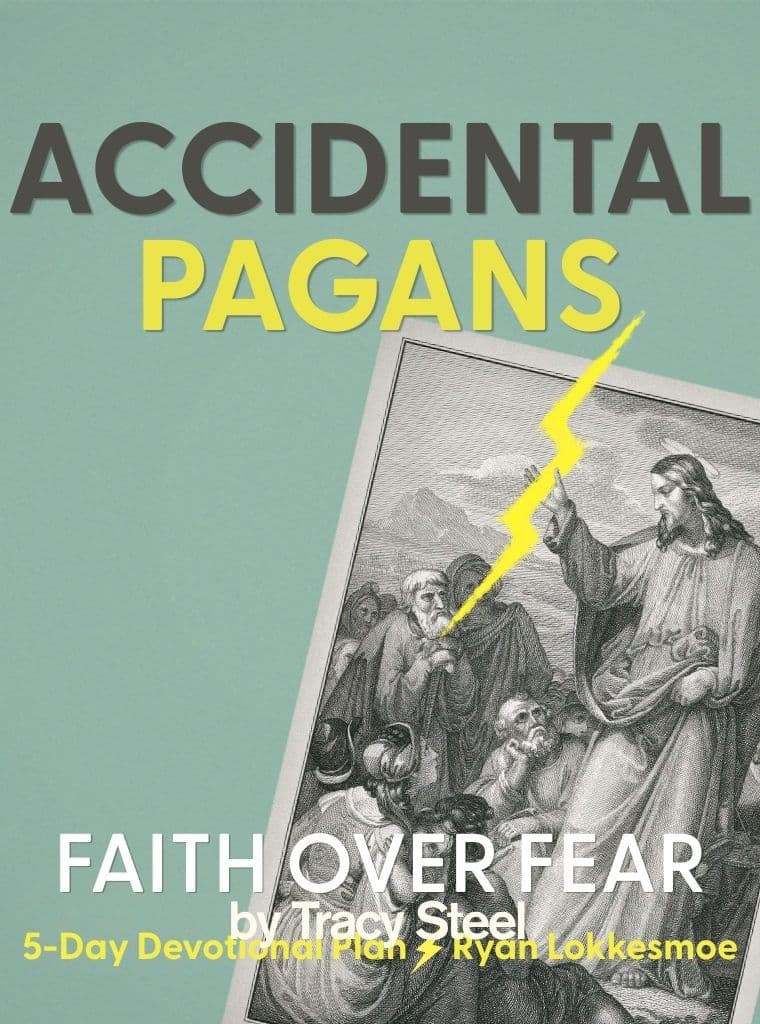
God describes himself as compassionate, gracious, slow to anger, abounding in love, and abounding in faithfulness. Would a God like that need to compete for the prize of who is most beautiful, and be upset if he didn’t win? Would a God like that angrily send a lightning bolt if some mortal human unwittingly stepped out of line? How much higher and better are God’s true qualities than the small and faulty impressions we often hold of him?
People who truly trust God don’t superimpose the fluctuations of life onto him, as if he’s unpredictable. They recognize that life has its peaks and valleys. If you live secure in God’s love and things are going well, you’ll be thankful for his gifts and grow in contentment. If life is a struggle, you’ll trust God to carry you through. There is great peace when you root out the accidental paganism—thinking God is erratic and selfish—and trust in his steadfast love.
As you now turn to the Bible to discover the truth about God’s disposition, reflect on these questions:
- Have you ever felt like you’re walking on eggshells with God, agonizing over what you say to him and trying to get your words just right? How did that make you feel?
- In what ways do you sometimes superimpose a human temperament onto God? How might that affect your relationship with him?
From the book