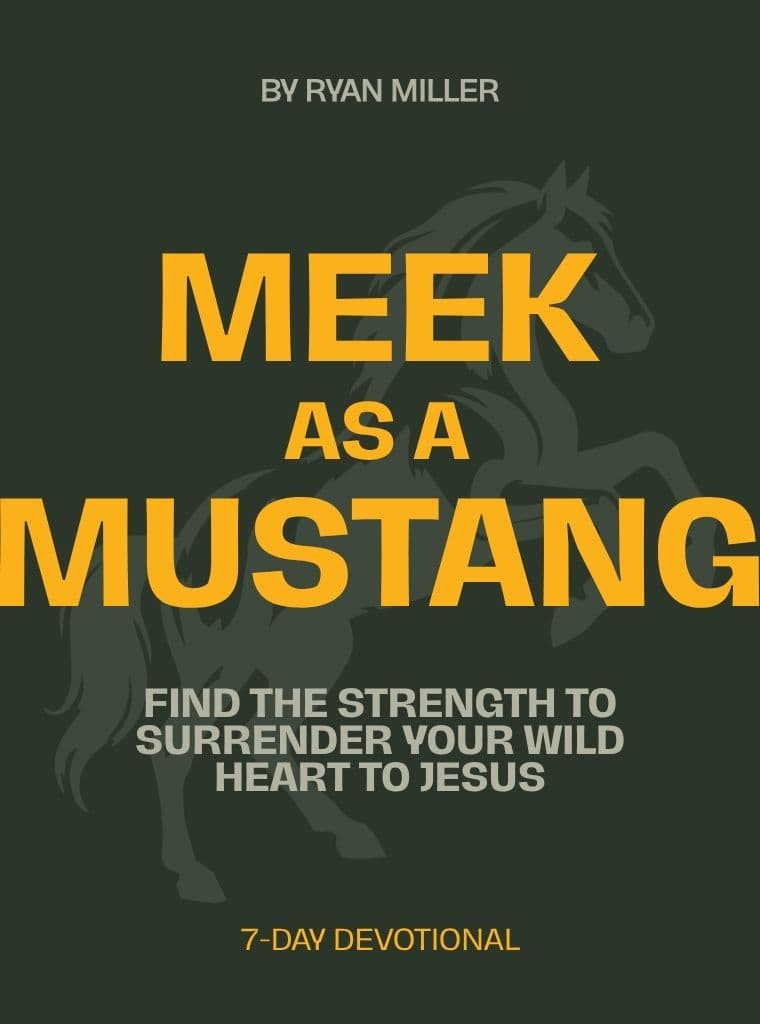
"Jesus Chooses Mustangs"
Jesus Chooses Mustangs
“As Jesus was walking along, he saw a man named Matthew sitting at his tax collector’s booth. “Follow me and be my disciple,” Jesus said to him. So Matthew got up and followed him. Later, Matthew invited Jesus and his disciples to his home as dinner guests, along with many tax collectors and other disreputable sinners. But when the Pharisees saw this, they asked his disciples, “Why does your teacher eat with such scum?” When Jesus heard this, he said, “Healthy people don’t need a doctor—sick people do.” Then he added, “Now go and learn the meaning of this Scripture: ‘I want you to show mercy, not offer sacrifices.’ For I have come to call not those who think they are righteous, but those who know they are sinners.” (Matthew 9:9-13, NLT)
“When Simon Peter realized what had happened, he fell to his knees before Jesus and said, “Oh, Lord, please leave me—I’m such a sinful man.” For he was awestruck by the number of fish they had caught, as were the others with him. His partners, James and John, the sons of Zebedee, were also amazed. Jesus replied to Simon, “Don’t be afraid! From now on you’ll be fishing for people!” And as soon as they landed, they left everything and followed Jesus.” (Luke 5:8-11, NLT)
“Remember, dear brothers and sisters, that few of you were wise in the world’s eyes or powerful or wealthy when God called you. Instead, God chose things the world considers foolish in order to shame those who think they are wise. And he chose things that are powerless to shame those who are powerful. God chose things despised by the world, things counted as nothing at all, and used them to bring to nothing what the world considers important. As a result, no one can ever boast in the presence of God.” (1 Corinthians 1:26-29, NLT)
Jesus could have assembled a dream team. If he wanted, he could have found the bravest, most capable, intellectual, and godly men. Instead, he stopped by the booth of a tax collector—a profession despised by everyone—and called Matthew to follow him. Then he approached a group of low-life fishermen and told them to drop their nets. He called Simon, a member of a revolutionary group, and asked him to join a movement far more radical than the one he was currently affiliated with. And this ragtag group was chosen to be the messengers who would go into the world and tell others about a Messiah who would save them from their sins. Why?
And it isn’t just the choosing of the disciples that could make us scratch our heads in wonder.
Why Moses? He couldn’t speak well, clearly had a temper, killed a guy and fled from Egypt, and didn’t even want to go rescue his fellow Israelites from slavery, having all sorts of excuses when God said to go (Exodus 2-4). This is the same man who eventually led a million captives into freedom across a parted sea (Exodus 14:19-31).
Why David? A young boy tending sheep in the fields, occasionally taking down a bear or a lion, he was anointed to become the king of Israel. This seemingly unqualified king was also an adulterous murderer, but in his repentance and worship, he was still called a man after God’s own heart (1 Samuel 13:14).
Why Paul? A fierce opponent of the message of Christianity and ruthless persecutor of those following it, he was chosen by God to become one of the most prominent Christian missionaries and evangelists to walk the planet (Acts 9).
Why did God choose these mustangs?
The answer is in the heart of Christ: meekness.
God is looking for warhorses he can lead into battle. And there are three qualities of meekness that are shared by all warhorses used by God.
- Warhorses are wild enough to answer the call of discipleship. Risk-taking, bold, influential, all in—there is nothing lukewarm about mustangs. They are unfazed by the cacophony of war and are able to run straight into the heat of battle at their master’s lead.
- Warhorses give full submission to their master. Once they trust their leader’s heart, mustangs are perfectly in tune with even the slightest nudge of the reigns or the smallest change in emotions. In an instant, warhorses will respond accordingly.
- Warhorses show us redemption. God, from the beginning, creates ex nihilo, making something out of nothing. He raises dry bones to a standing army. He tames the wild, throwaway mustang into a warhorse and molds the seemingly irredeemable into someone purposeful for his Kingdom, something he alone could get the glory for.
From the book