
Good Manners Bootcamp
Good Manners Bootcamp
A hot-tempered person stirs up conflict,
but the one who is patient calms a quarrel.
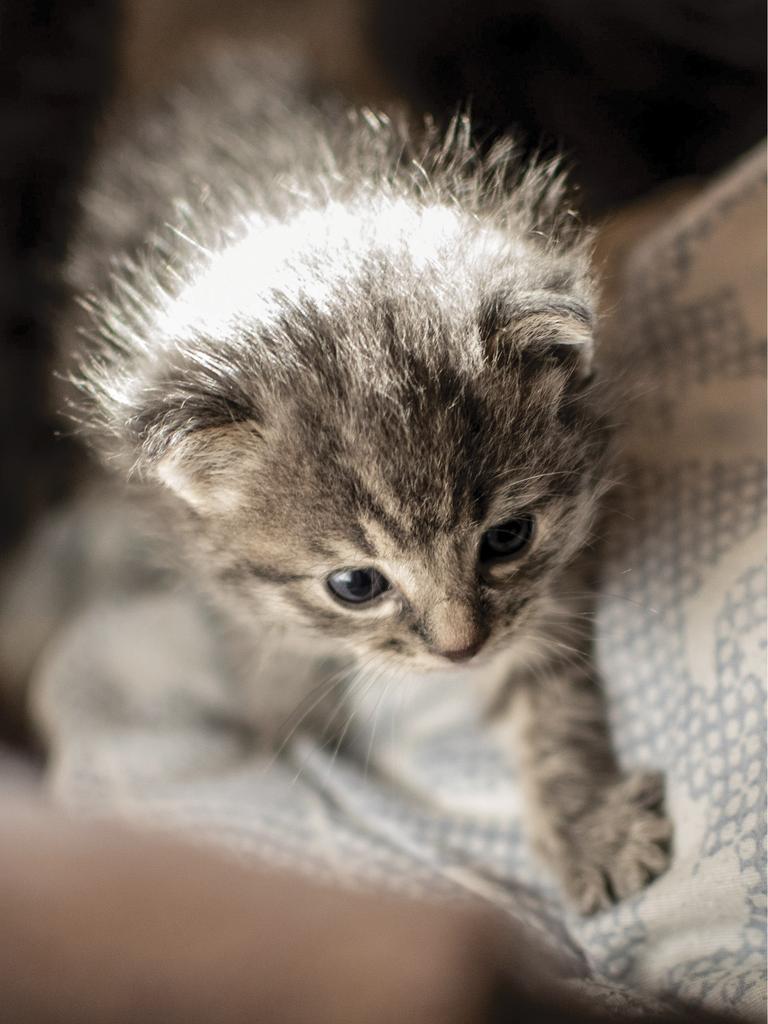
WHEN BARBARA’S FRIEND DISCOVERED three emaciated feral kittens living under a rotting shed on his property, Barbara said she would do whatever she could to help them. She had been rescuing and raising cats for more than twenty years, but this would be her first experience with feral cats—cats who are unfamiliar with and wary of humans. While she had committed to help them, she feared the cats, which she named Oliver, Izzie, and Maggie, would be difficult to socialize.
However, ten months had passed, and all three kittens were growing into even-tempered, well-socialized, pleasant cats. And Oliver had quickly become the most affectionate cat Barbara had ever known. The little gray cat sought her out, sat on her lap, slept on her chest, and perched himself on her shoulder. When he was tired or overstimulated, he wanted to be cradled in Barbara’s arms and rocked like a baby. Oliver filled up every lonely space in Barbara’s heart.
He had also charmed Barbara’s thirteen-year-old niece, Katie, who loved helping her aunt care for the cats. Katie, who was often timid by nature, loved carrying Oliver around Barbara’s house. She seemed to find comfort and courage holding him.
“Good boy, Oliver!” Barbara would praise him, usually with a giant smile on her face, every time Katie left.
But one day while Katie had Oliver in her arms, he swatted Katie’s face without warning or provocation. Startled, Katie dropped Oliver onto the kitchen counter as tears filled her eyes. Barbara noticed a puffy red line near Katie’s bottom lip where Oliver had scratched her. Horrified at her cat’s uncharacteristic behavior, Barbara quickly put Oliver in his cat carrier and got some ice and antibiotic ointment for Katie.
Barbara apologized repeatedly to her niece. Katie smiled and attempted to brush off the incident, but Barbara could tell the girl was shaken. Especially when she asked to go home thirty minutes earlier than usual.
That night, Barbara kept replaying the sequence of events before Oliver’s attack, trying to determine the reason behind it. She couldn’t come up with one. Maybe it was an isolated incident, she thought hopefully as she crawled into bed.
That hope crumbled the next day when Oliver, after loudly meowing to be picked up, hit Barbara’s face with his paw minutes later. He hadn’t meowed or hissed—just struck her cheek, leaving a stingy scratch from his claw. Shocked, Barbara set him down and stood dumbfounded as he scampered off to play with Maggie and Izzie.
Maybe he doesn’t like being held anymore.
Later that evening, Oliver cried loudly for Barbara’s attention and then purred contentedly in her arms while she watched TV. Grateful that her snuggle-bug was back, she held him close and prayed his brief stint as Dr. Jekyll and Mr. Hyde was over. However, when Maggie and Izzie batted a wadded-up piece of paper into the room, Oliver once again hit Barbara’s face.
That was the answer! He swats when he wants to be put down! she suddenly realized, rubbing her cheek.
Now that she was aware of the reason Oliver resorted to bullylike tactics, Barbara formulated a plan to teach him some manners. Maybe I shouldn’t pick him up anymore, she briefly thought. But Barbara knew Oliver was a cuddle muffin at heart—one who simply needed to learn appropriate behavior in order to keep being his affectionate little self.
Over the next two weeks, Barbara studied Oliver’s behavior whenever she held him. She tried to anticipate when he was preparing to swat so she could redirect him or put him down before his paw touched her face. If she didn’t catch him in time, she would place him in his cat carrier after he made contact. She also used treats and play time to reward polite behavior. It didn’t take long for Oliver to grasp the concept of meowing or wriggling to be put down, instead of swatting.
Two weeks after Oliver graduated from Barbara’s good manners training course, Katie returned for a visit. She eagerly greeted each of the cats, but she kept her distance from Oliver. “I’m still scared of Oliver, Aunt Barbara.”
“I understand, Katie. Oliver didn’t mean to hurt you. But it will take time for you to trust him.”
The next week when Katie came to visit, Oliver greeted her loudly, rubbed against her ankle, then sat facing her, clearly wanting to be picked up. Katie smiled and lowered herself beside him. She patted her lap, inviting him to climb up. Oliver happily accepted Katie’s compromise and within minutes fell asleep on her lap.
It took several more visits before Katie felt comfortable enough to pick Oliver up again or hold him very long. But Katie hasn’t stopped inviting Oliver onto her lap, well outside of face-swatting range.
PAWS & PONDER . . .
What conflict did Oliver stir up with his face-swatting behavior? How did both Barbara and Katie demonstrate patience? What was the result of their patience? What situation are you facing today that requires patience? What conflict might result if you act rashly?
Paws & Pray
Lord, it is so easy for me to react without thinking, out of hurt and pride. I want my words to be filled with patience, love, and trust in you. Grant me wisdom and discernment to know when and how to speak up and when to remain quiet. And help me be a person who calms quarrels and points others to you.
From the book


